
Most fit problems come down to the tip, the angle or the amount of time you wear the buds, not to your ears being the wrong shape. Start by deciding whether the problem is looseness or pain, because the fixes pull in different directions. A secure seal should feel snug and stable, never sharp or bruised.
A loose earbud usually needs a different tip size or a cleaner seating position. A painful one usually needs less pressure, not more. If either problem persists after sensible adjustments, treat it as a fit or health question rather than something to solve by pushing harder.
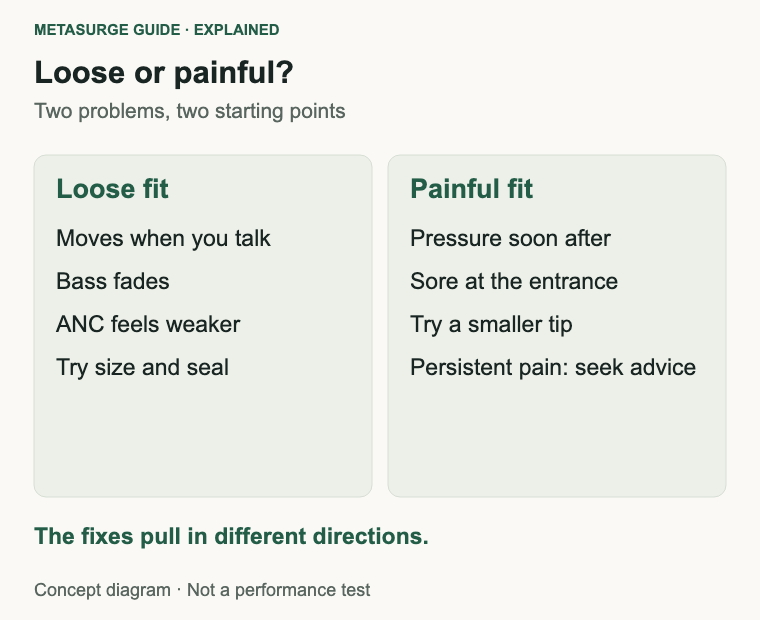
Separate a loose fit from a painful one
A loose fit announces itself through movement. The bud works its way out when you walk, talk or chew, the bass thins out, noise cancelling becomes less effective and you find yourself turning the volume up. The sound may still be recognisable, which is why people often blame the earbuds’ tuning instead of the seal.
Pain behaves differently. You notice pressure soon after inserting the bud, or a sore spot develops over an hour. Some people feel itching, a blocked sensation or tenderness at the canal entrance. A tip that is too large, too stiff or pushed too far is a common explanation, but irritation can also have a skin or ear-health cause.
Use a simple description to sort the two. Where does it happen? Does the bud move when your jaw moves? Is the discomfort immediate or delayed? Does one ear behave differently from the other? Those answers point to a practical next step.
| What you notice | What to check first |
|---|---|
| Buds slip out while walking | Tip size, shape and insertion angle |
| Bass disappears when you turn your head | Seal, tip condition and earwax |
| Soreness within minutes | Smaller tip, less insertion depth |
| Itching or irritation after long wear | Wear time, hygiene and ear health |
| One side always feels different | Separate sizing, canal shape and placement |
Asymmetry is normal. Ear canals differ in size and shape, and one can be more oval than the other. Using a medium tip on one side and a large on the other is a legitimate adjustment when the product and its guidance support it, not a sign that you are doing it wrong.
Check tip size, shape and seal
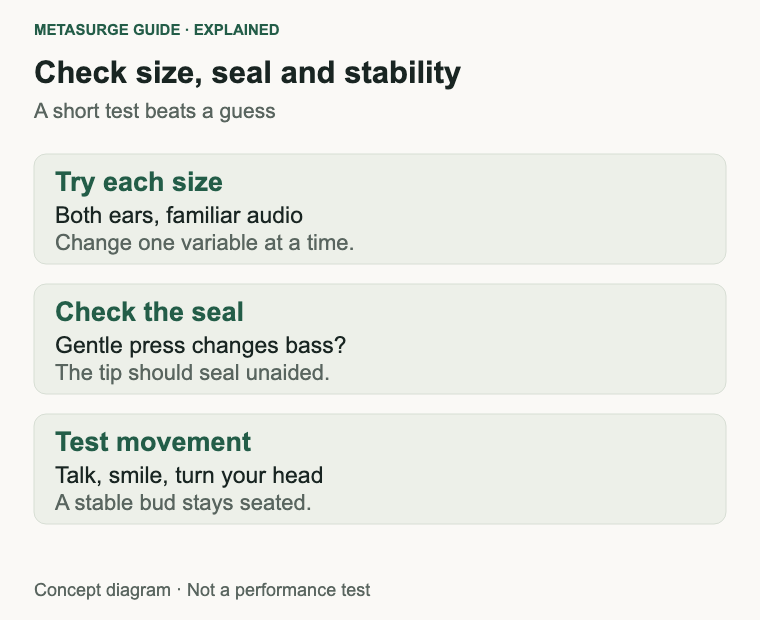
Work through the supplied tips one size at a time rather than guessing. Fit the same size to both ears first, listen to a familiar track and note whether the bass remains steady when you move. Then try the adjacent size. A tip that is too small feels loose and lets sound leak; one that is too large can press on the canal without sealing properly.
The seal is the thing you are testing, not how far the bud travels. A good seal usually makes bass fuller and noise cancelling more effective at the same volume. You can check it gently by pressing the bud slightly toward your ear and listening for a change, then letting go. If the sound improves only while you hold it, the tip is not sealing on its own.
Tip shape matters as much as the label on the bag. Silicone tips, foam tips and multi-flange designs behave differently, and a shape that suits one ear may not suit the other. Manufacturer guidance for models such as the soundcore P30i recommends trying different tip sizes and checking that both buds sit correctly, including mixing sizes when one side feels less stable. That is practical advice, not a promise that any particular tip will suit you.
Replacement tips need to match the nozzle and the charging case. A third-party tip can grip the nozzle but still stop the bud seating in its case, which affects charging rather than fit. Check the model’s documentation before buying a multipack, and keep the original tips as a reference.
Cleanliness affects grip too. A tip that is glossy with skin oil or earwax can slide, and a swollen or dirty tip may not seal. Follow the manufacturer’s cleaning method, let the tips dry completely, and replace them when they harden, tear or stop holding their shape. Do not poke anything into the nozzle or the ear canal to clean them.
Adjust how you insert and wear them
Insertion is a small skill. Gently lifting the top of your ear can open the canal enough to seat the tip, but the tip should sit at the entrance, not be driven inward. A slight twist often helps the tip settle. If you need force, the size or shape is wrong.
Try the bud in the position where it naturally rests, then check what happens when you speak, smile and turn your head. These movements change the shape of the canal and pull on the skin around it, which is why a fit that works at a desk can fail on a walk. A bud that stays put through a short conversation is a better sign than one that feels fine while you sit still.
For wired in-ears, route the cable over the top of your ear where the design allows it. That reduces the tug that pulls a bud loose when the cable catches on clothing. Keep a little slack near the ear rather than a tight loop.
True wireless models add their own variables. Stem designs and button-shaped buds sit differently, and a case that is easy to pocket may encourage shallower insertion. Try the bud with the case removed from your pocket and with the ear tip fully seated on the nozzle; a partly fitted tip changes the angle.
Hair, glasses, hats and helmets can all interfere. Frames that pass close to the ear can lift a cable or nudge a bud. If you wear a helmet regularly, check the fit with it on rather than assuming the bud will stay put. Moisture matters as well: a damp ear or a sweaty tip loses grip, so dry both before a long session.
Give a new tip size more than a minute. Some pressure settles as the tip warms, while genuine soreness does not. Take the bud out if the discomfort sharpens.
Look after tips and ear health
Clean the tips as the manufacturer directs, usually with mild soap and water, and dry them fully before refitting. Avoid solvents, alcohol-heavy cleaners and abrasive tools unless the product documentation specifically allows them. A cracked or hardened tip cannot seal reliably, no matter how carefully you insert it.
Earwax is part of normal ear health, but it can interfere with a seal and with perceived loudness. Do not use cotton buds, hairpins or homemade tools to remove it. healthdirect advises against putting anything inside the ear and suggests a pharmacist or doctor for troublesome wax. If a bud suddenly sounds quieter on one side, check the tip and the nozzle first, then have the ear looked at rather than digging around.
Moisture deserves attention too. Swimmer’s ear is an infection of the outer ear that is associated with water remaining in the canal, and earbuds can trap moisture during exercise. Dry your ears after swimming or a sweaty session, and avoid wearing buds in a wet ear for long periods.
Stop wearing the buds and seek advice if you have ear pain lasting more than a few days, discharge, bleeding, a change in hearing or persistent irritation. These are health signals, not fit problems. A larger tip or a different brand is not the right response to them.
Sharing tips is not a good idea. Earwax and skin cells transfer easily, and a tip that fits someone else is not sterile. If you lend a pair, fit a fresh tip and clean the housing according to the manufacturer’s instructions.
Know when to change the design or ask for help
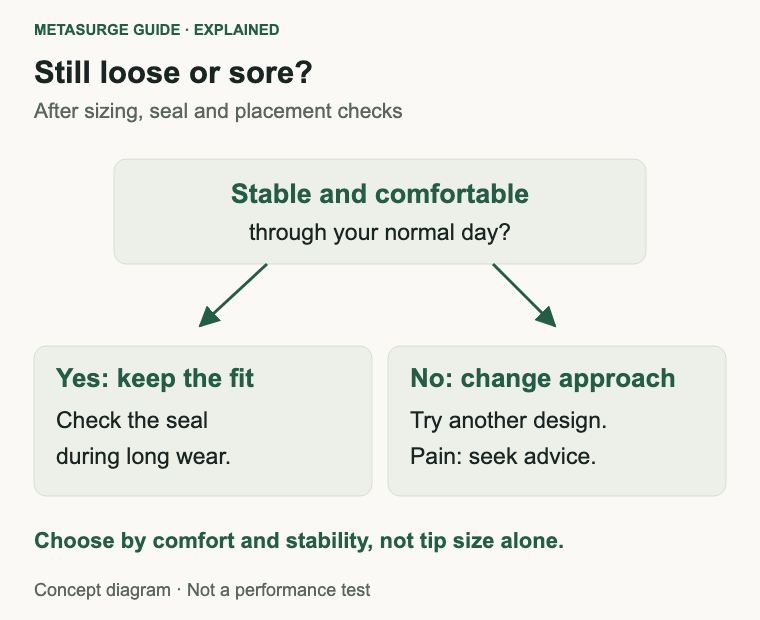
After you have tried the supplied sizes, checked the seal and adjusted insertion, some ears still will not hold a particular bud. That is a design mismatch, not a personal failing. A different nozzle shape, a smaller housing, an ear-hook design or an open-ear style may suit you better. For wired in-ears, a model with a shaped housing or a cable that routes over the ear can be more stable than a straight-barrel design.
Custom-moulded tips are an option in some markets, but they need a proper impression and a compatible bud. They are not a guaranteed solution, and they change how the bud sits in its case. Ask about the process and the return policy before committing.
If pain continues despite a smaller tip and a shallower position, get the ear checked. A clinician can look for irritation, infection or a wax blockage that you cannot see. Continuing to experiment with bigger tips risks making the sore spot worse.
Fit also affects what you hear. A poor seal reduces bass and makes noise cancelling work harder, so the buds can seem quiet or thin. If the sound is distorted rather than merely weak, stop and check the source, the connection and the ear before assuming the driver has failed.
A practical buying checklist helps: choose a bud with a range of tip sizes, check that replacement tips are available, confirm the case accepts the tips you need, and prefer a design you can wear for your longest regular session. Comfort over an hour matters more than a perfect fit for thirty seconds.
Frequently asked questions
Why do my earbuds fall out when I talk or chew?
Jaw movement changes the shape of the ear canal and pulls on the skin around it. A tip that seals at rest can break that seal when you speak. Try a different tip shape, check that the bud is not sitting too shallowly, and consider an ear-hook design if the problem persists.
Is it bad to wear in-ear headphones all day?
Long sessions can trap moisture and put sustained pressure on the canal. Take breaks, keep the tips clean and dry, and stop if you notice soreness or irritation. There is no universal time limit that suits everyone.
Can I use ear tips from another brand?
Only if they fit the nozzle securely and allow the bud to charge in its case. A tip that seems to fit can still change the sound or block charging. Check the model’s guidance and test the fit before relying on it.
One ear always hurts. Should I try a bigger tip?
No. Pain usually calls for a smaller or softer tip, a shallower position or a health check. A bigger tip adds pressure. If the discomfort persists, have the ear examined rather than continuing to size up.
Relevant examples to explore
Editorial examples, separate from Best Sellers rankings. Within each group, products are ordered by Amazon Best Sellers position captured 17 October 2026; positions can change.
As an Amazon Associate MetaSurge Guide earns from qualifying purchases. Check current details, price and availability on Amazon before buying. Country detection by DB-IP.
Sources and editorial approach
This guide uses healthdirect’s advice on earache, ear wax and swimmer’s ear, plus soundcore’s guidance on ear-tip fit and seal, checked on 17 October 2026. Product examples are illustrative and are not ranked. Fit experiences vary, and no universal tip size, insertion depth or comfort outcome is claimed. The scenarios are editorial reasoning, not hands-on measurements.
Where to go next
If your fit checks point to a different design, browse the In-Ear Headphones guide to compare shapes, tip options and case sizes. Choose a model whose documented fit and charging arrangements match your ears and your routine, rather than assuming a more expensive pair will stay put.